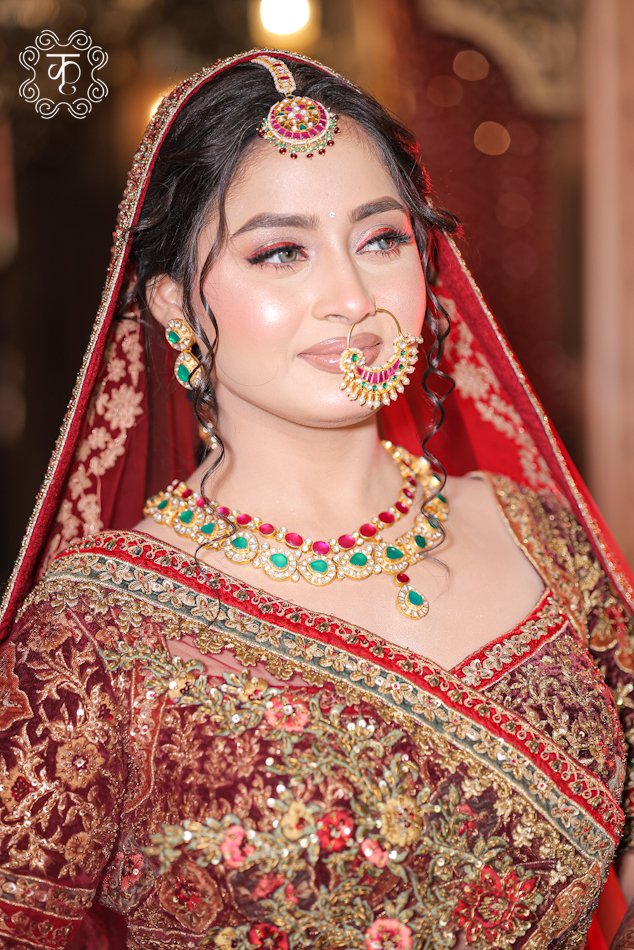
This is one of the earliest and most personal decisions a bride makes, often before she’s even picked a colour or a designer. At Kridhaa, we’ve noticed the same pattern across hundreds of consultations. Brides who love tradition and drape lean toward a saree. Brides who want structure, volume and a clear silhouette lean toward a lehenga. Neither is more “bridal” than the other. Here’s how to actually decide.
Comfort and Movement
A lehenga generally offers more freedom of movement for a long wedding day. You can walk, sit and dance without worrying about pleats shifting or the pallu slipping, which matters for functions like the sangeet or reception where you’ll be on your feet for hours.
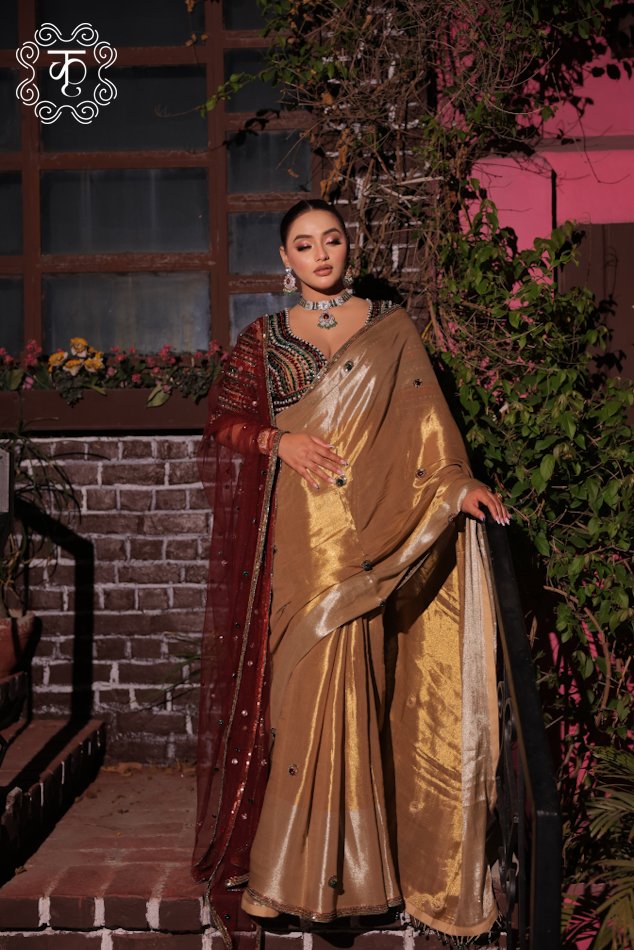
A saree requires more mindful movement. The drape needs occasional adjustment, and sitting for long ceremonies calls for a saree that’s been pinned properly. That said, a well draped saree with a good fall and proper pinning can be just as comfortable, and many brides find the drape itself calming during a hectic day.
Tradition and Regional Significance
If your family or community has a strong saree tradition, such as a Bengali red and white Benarasi or a South Indian Kanjeevaram for the ceremony, this often settles the decision on its own. Lehengas carry their own regional weight too, particularly in Punjabi and North Indian weddings, where they’ve become the default bridal choice over the last few decades.
Neither is more authentic than the other. Both have centuries of bridal history behind them, and the right choice is the one that feels true to your own family and personal story.
Silhouette and Body Confidence
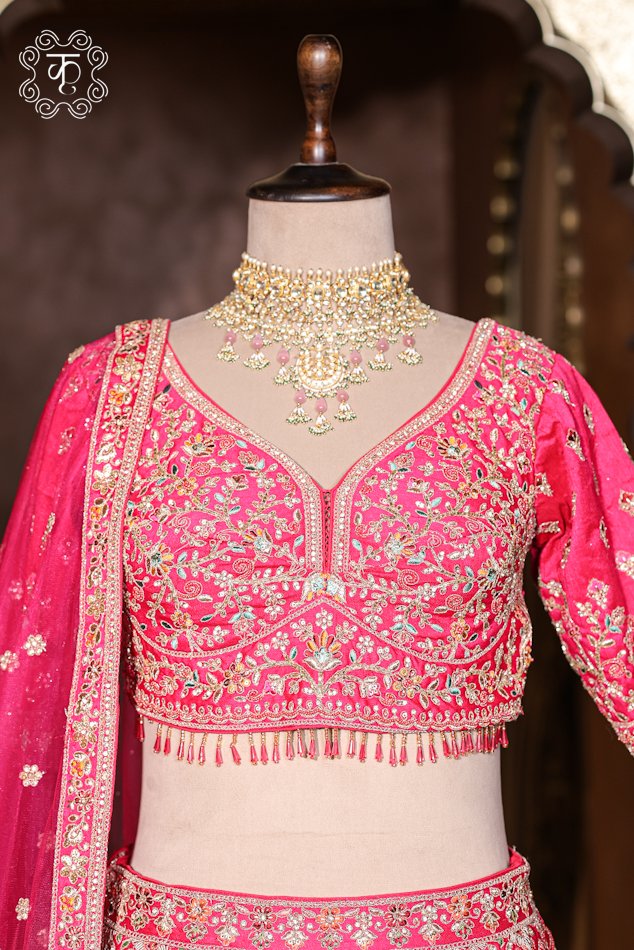
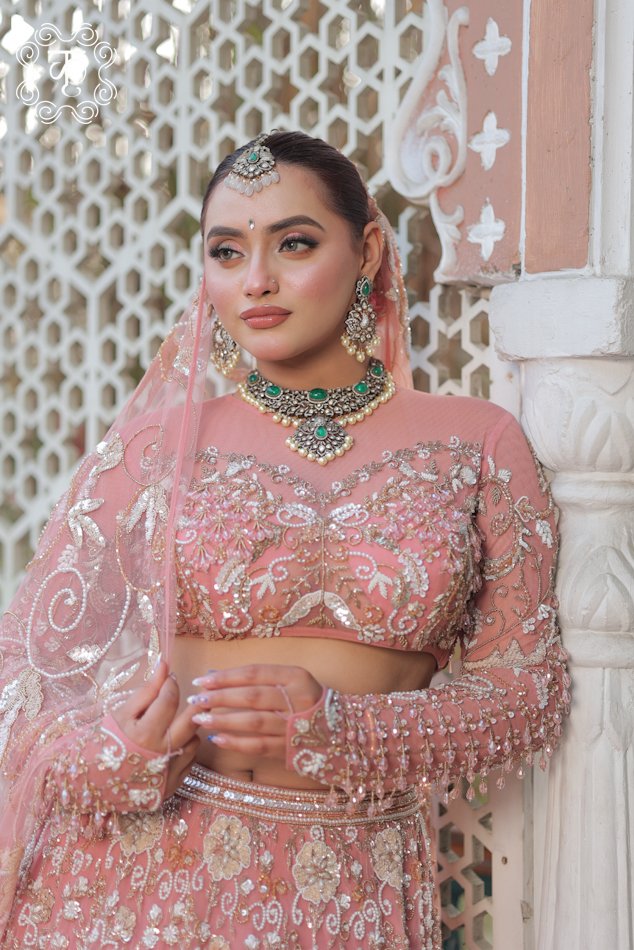
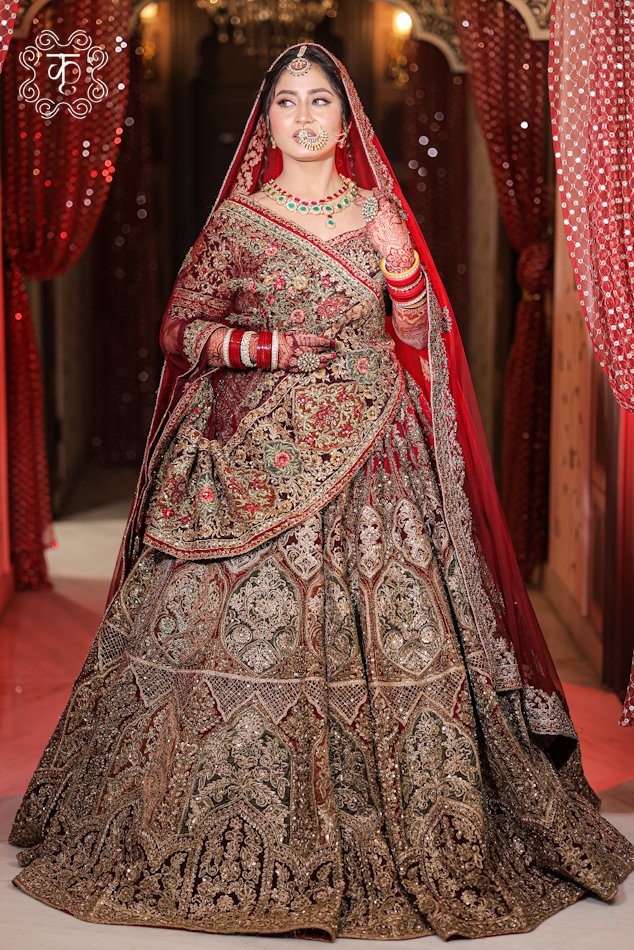
A lehenga naturally creates structure and volume, which some brides find gives them more confidence, especially for a fuller, more dramatic bridal look. A saree drapes closer to the body and celebrates a more fluid silhouette, which many brides feel is more elegant and less “costume like.”
If you’re unsure which flatters you more, try both in a fitting before deciding. Our styling team always recommends this over choosing from photographs alone, since a silhouette that looks stunning on someone else’s body can feel completely different on yours.
Photographs and Video
Lehengas tend to photograph with more visual drama, especially in wide shots and during the phera ceremony, since the volume and embroidery spread out beautifully. Sarees photograph with more elegance and closeness, especially in candid and close up shots, where the drape and pallu detail become the focus.
If you’re planning a heavily choreographed sangeet performance, a lehenga usually allows more freedom for movement. If your priority is a classic, timeless wedding album, a well draped silk saree rarely goes out of style.
Can You Choose Both?
Many Delhi brides now do exactly this, wearing a lehenga for the higher energy functions like sangeet and reception, and a traditional saree for the actual pheras or a family ritual that calls for it. There’s no rule that says you must choose one for the entire wedding.
Our Honest Advice
Choose based on how you feel wearing it, not on what’s trending or what a relative expects. Try both silhouettes in fabrics close to what you’re considering, move around in them, sit down, raise your arms, and notice which one you forget you’re wearing. That feeling of ease usually tells you more than any photograph can.
At Kridhaa, our personal styling consultations always start with this exact conversation, helping you weigh comfort, tradition and your own instinct before you commit to either.
About Kridhaa
Kridhaa is a designer ethnic wear brand from Paschim Vihar, New Delhi, specialising in handcrafted sarees, bridal lehengas and bespoke personal styling.
🛍️ Shop the collection: https://kridhaa.in
📸 Follow us on Instagram: https://www.instagram.com/kridhaaofficial
▶️ Watch styling videos on YouTube: https://youtube.com/@kridhaa.official
📍 Visit us in Paschim Vihar, New Delhi | DM us for a personal styling consultation
📞 +91 9205046664