
how long does it take to make a saree? When a client at Kridhaa holds a handwoven Banarasi for the first time and asks about the price, we love answering with a question of our own: *”How long do you think this took to make?”*
However, most people usually guess “a few days.” In reality, the answer surprises almost everyone. Depending on the craft, a single designer saree can take anywhere from **three days to over six months** of human work. Here’s where all those hours actually go.
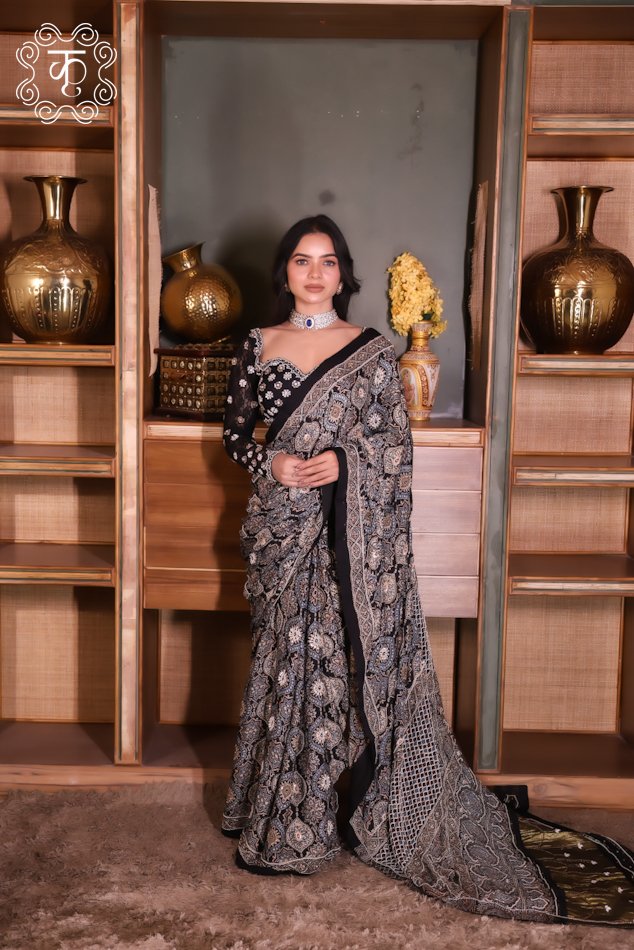
How Long Does It Take to Make a Saree? Craft-by-Craft Timeline
A simple power-loom saree can be produced in a few hours — which is exactly why it costs a few hundred rupees. But the moment human hands enter the process, time multiplies:
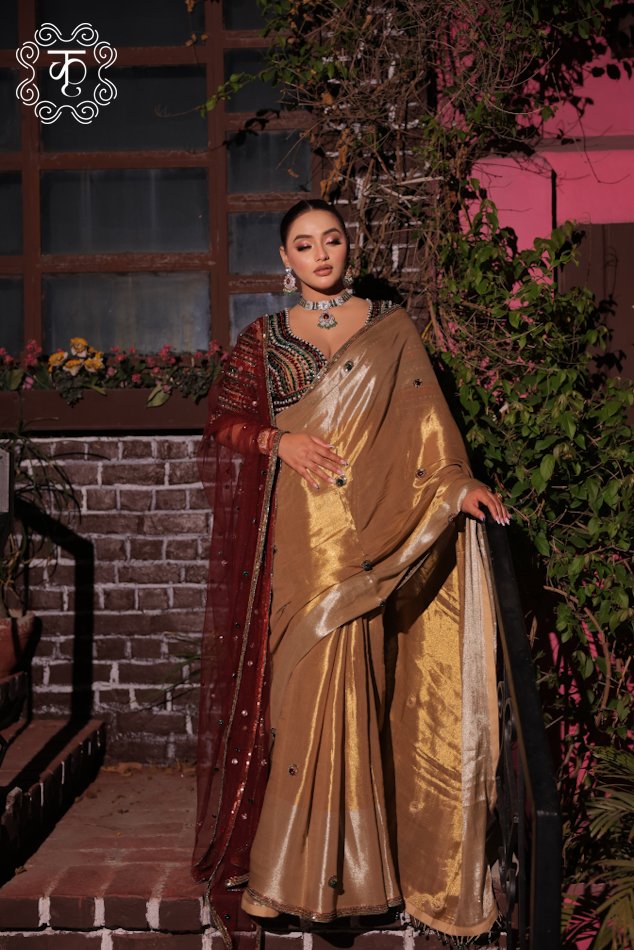
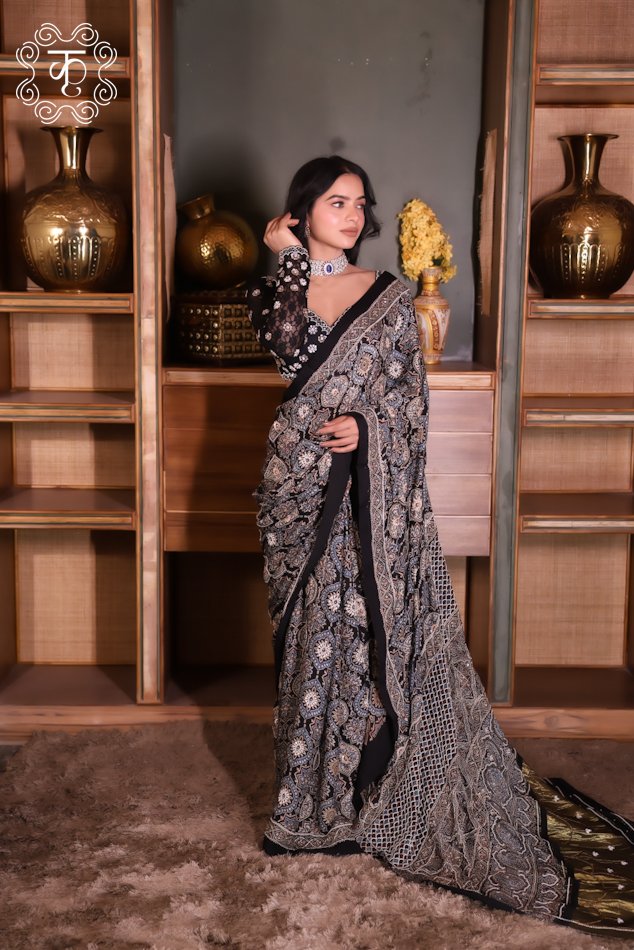
A **plain handloom cotton or silk saree** typically takes 2–5 days on the loom. A **Banarasi silk saree with zari motifs** takes anywhere from 15 days to a few months, depending on the density of the design. A **Kanjeevaram with intricate borders and pallu** can take 10–20 days with two weavers working together. **Hand-embroidered sarees** — zardozi, aari, kundan or dabka on silk or organza — commonly take 3 to 8 weeks, with multiple artisans embroidering the same piece in shifts. And master-level pieces, like a fine **jamdani** or a fully hand-embroidered bridal saree, can genuinely cross six months.
Even at the modest end, that is 100–200 hours of skilled work. At the top end, it’s over 1,000.
How Long Does It Take to Make a Saree? Step-by-Step Process
Design and graphing (2–7 days).
Before a single thread moves, the motif is drawn and converted into a weaving graph or embroidery khaka (tracing). For jacquard weaves,Artisans punch the design onto cards that guide the loom — an art in itself.
Preparing the yarn (3–5 days).
Artisans degum, dye, dry, and wind the raw silk. Warping — arranging thousands of parallel threads that will run the length of the saree — takes a full day or more, and a mistake here ruins everything downstream. A typical silk saree’s warp holds around 5,000–6,000 individual threads, every one of which passes through human hands.
Setting the loom (1–2 days).
Weavers draw each thread through the heddles and reed by hand. Weavers often work in pairs for this step alone.
The weaving itself (days to months).
This is the heart of it. A weaver on a handloom produces only a few inches to a metre of intricately patterned fabric per day. Weavers inlay zari butis one pick at a time. A densely brocaded Banarasi advances slowly precisely because every golden motif you see was placed by hand, thousands of times over.
Embroidery (2–8 weeks, if applicable).
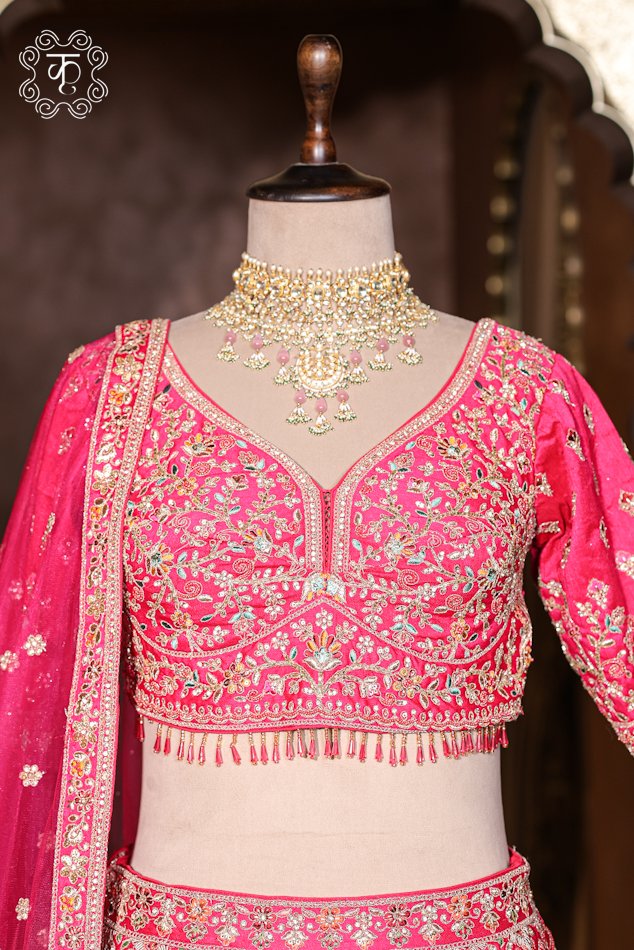
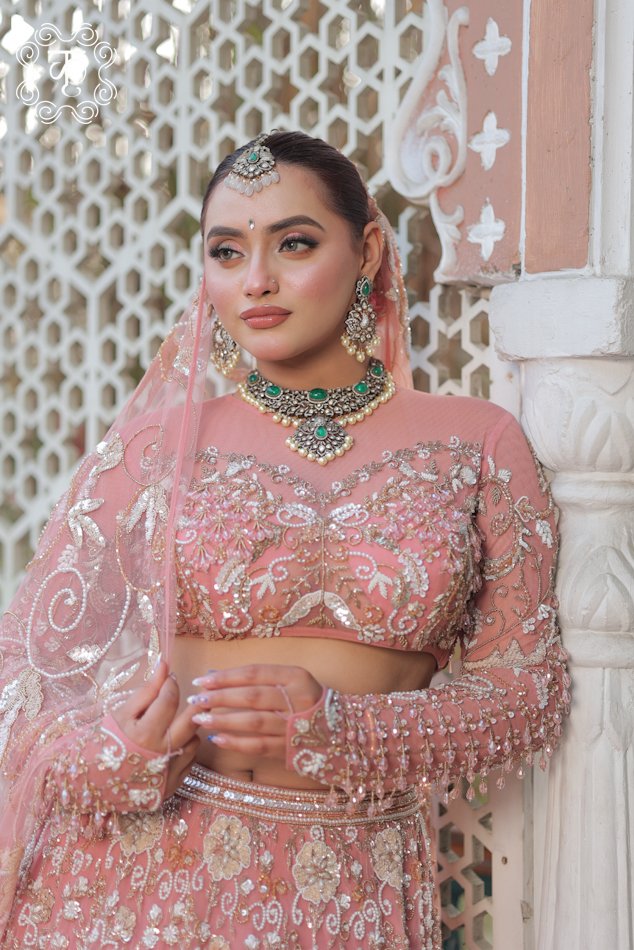
For embroidered designer sarees, tArtisans stretch the woven or plain fabric on an adda.a (wooden frame), and karigars sit around it working zardozi, sequins, cutdana or threadwork. A heavily embellished pallu alone can take one artisan two weeks. On bridal pieces, three or four karigars often work the same frame for a month.
Finishing (2–4 days).Finishing (2–4 days).
Washing, polishing the zari, checking every inch for flaws, tasselling the pallu, final pressing and quality checks.
Add it up, and the “simple” designer saree you drape in ten minutes represents weeks of another person’s working life.
Why Does It Take So Long to Make a Saree?
Understanding the hours changes how you see the price tag. When a handcrafted saree costs ten times a machine-made one, you’re not paying for a brand name — you’re paying for 300 hours of a weaver’s skill, often passed down over three or four generations. You’re also buying something a machine cannot replicate: the slight, living irregularities of handwork that make your saree the only one exactly like it in the world.
It also changes how you care for it. A garment that took months to create deserves muslin wrapping and gentle handling — we’ve written a full guide on how to care for designer sarees if you’d like the details.
The Kridhaa Perspective
At Kridhaa, We choose every designer saree with this question in mind: does the piece honour the hours that went into it? When you buy from our collection, we can tell you about the weave, the work and the craft behind it — because we believe you should know the story you’re wearing.
So the next time someone admires your saree, you’ll have a better answer than “thank you.” You can tell them it took a hundred hours to make — and every one of them shows.
Explore our handcrafted designer sarees at kridhaa.in, or message us on Instagram for a personal styling consultation.
—
About Kridhaa
Kridhaa is a designer ethnic wear brand from Paschim Vihar, New Delhi, specialising in handcrafted sarees, bridal lehengas and bespoke personal styling.
🛍️ Shop the collection: https://kridhaa.in
📸 Follow us on Instagram: https://www.instagram.com/kridhaaofficial
▶️ Watch styling videos on YouTube: https://youtube.com/@kridhaa.official
📍 Visit us in Paschim Vihar, New Delhi | DM us for a personal styling consultation